

Propaganda, All Is Phony
Money Doesn’t Talk, It Swears

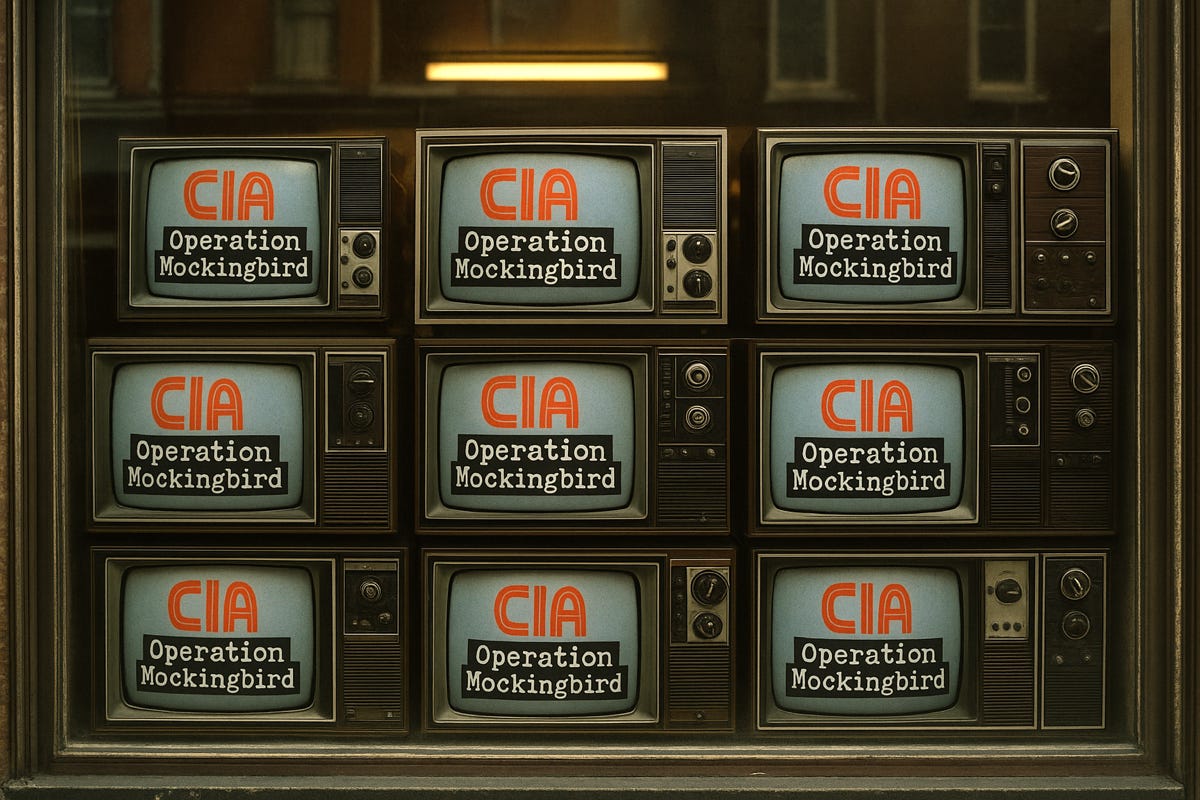
If you ever wanted to know the history of the corporate media normalizing unchecked corruption by the American oligarchy while protecting the military/industrial/petrochemical/intelligence complex and systematically abusing the working people of America… THIS is the post for you!
From the war on communism, to The War on (some) Drugs, and the war on terrorism, to today’s continued war on the working class, the answer to the questions “HOW DID WE GET HERE?” and “WHY DO PEOPLE BELIEVE COMPLETE BULLSHIT?” is below for all to read.
This exhaustive and fully referenced timeline on the history of the corporate media and the CIA limiting dissent by controlling the narrative and framing the acceptable debate with an endless tidal wave of propaganda dumped on the American people is EXACTLY why I’ve embraced using the tools of the empire against it. For all the fears of “AI” this project couldn’t have been done without the factchecking and research power of LLMs like Perplexity and prompts like Research Mode v2 to organize the chaos and find facts hidden among the propaganda.
CIA, CORPORATE POWER & THE WAR ON WORKERS
Unmasking Media Control: Empire, Intelligence, and the War on Truth
This project is a comprehensive, uncensored history of media manipulation by the U.S. intelligence community, private capital, and corporate media institutions, spanning from the propaganda labs of World War I to the algorithmic psyops of the 21st century. It exposes how the CIA, NSA, and their ideological allies in the corporate elite have weaponized the press not to inform the public—but to neutralize dissent, crush organized labor, and enforce a neoliberal world order.
Through declassified documents, congressional investigations, whistleblower testimony, and buried historical accounts, this series will trace how key figures—like Allen Dulles and Henry Luce—systematically co-opted the media under the guise of fighting communism, when in reality they were waging war on workers, democracy, and any movement that challenged monopoly control.
From Project Mockingbird to modern digital censorship, this investigation lays bare the real function of the so-called “free press” in America: to manufacture consent, erase truth, and shield the powerful from accountability.
I. INTRODUCTION: THE INVISIBLE EMPIRE OF PROPAGANDA
“The greatest threat to press freedom has never been the mob—it’s been monopoly and the men behind the agencies of empire.”
Defining the Terrain
In every society, control of the narrative is control of power. In the United States—where the myth of a “free press” is held up as sacred—few citizens are taught to question whoactually owns the press, who writes the headlines, or who filters the flow of information.
To understand the machinery of modern media control, we must begin with three essential concepts:
Media Control refers to the deliberate influence over what information is published, suppressed, or spun by news outlets. This control may be exerted through ownership, funding, government directives, or covert influence campaigns.
Psychological Operations (PSYOPs) are operations intended to convey selected information and indicators to audiences to influence their emotions, motives, and objective reasoning. Though typically associated with military campaigns abroad, PSYOPs have increasingly been deployed domestically by U.S. intelligence agencies and corporate interests.
Disinformation is false information spread deliberately to deceive. In the American context, disinformation has often been presented under the banner of patriotism—used to justify wars, discredit activists, and destroy democratic movements.
The Unseen Hand
This is the story of an invisible empire—an alliance between intelligence agencies, media barons, and corporate titans that has shaped what Americans believe for over a century. Behind every “Red Scare,” every foreign coup, every debunked “weapons of mass destruction” headline or domestic smear campaign, there is a pattern: the suppression of people-powered resistance and the protection of elite capital.
This pattern did not emerge overnight. It evolved in stages:
The Committee on Public Information (1917–1919) pioneered mass media propaganda to build support for World War I and crush socialist and labor movements.
The OSS (Office of Strategic Services) during WWII formalized psychological warfare and laid the groundwork for the CIA.
After 1947, the CIA transformed propaganda into a full-scale global operation, recruiting hundreds of journalists and editors under programs like Project Mockingbird.
The Church Committee (1975) partially exposed these tactics, revealing hundreds of covert media assets—but the public reforms were superficial, and the programs continued under new names.
By the 21st century, the model evolved again: intelligence agencies began working directly with Silicon Valley platforms, erasing inconvenient truths with the click of an algorithm.
Why Now?
We are living through a crisis of credibility. Trust in the press is at historic lows. Workers are under assault from billionaires and bots. And yet, calls for media reform are often drowned out by bipartisan cries of “disinformation”—without ever asking who defines the truth?
This series traces the roots of that question across a century of collusion—between journalists and spies, moguls and generals, and politicians and propaganda machines. It is not a neutral history. It is a reckoning.
From the birth of state propaganda during World War I to the global surveillance-industrial complex of the post-9/11 era, this is the untold story of how power hijacked the press—and how we might reclaim it.
II. ROOTS OF PROPAGANDA: WORLD WAR I TO WORLD WAR II
Before the CIA, before Operation Mockingbird, before televised disinformation and algorithmic suppression, there was the Committee on Public Information, the Office of Strategic Services, and a set of private visionaries who saw public opinion not as an expression of democracy—but as a battlefield to be controlled.
This section traces the birth of modern propaganda from its foundations in World War I psychological operations to its codification in post-WWII law. What we now call “media narratives” began as war tools—crafted by advertisers, psychologists, and imperial bureaucrats—and perfected by men who would become the architects of empire.
1. Committee on Public Information (1917–1919)
Created by President Woodrow Wilson during WWI, the CPI (aka the Creel Committee)was the first large-scale propaganda machine in U.S. history—aimed not at an enemy population, but at Americans themselves.
What happened:
Wilson founded the CPI in 1917 to build public support for entering World War I, appointing journalist George Creel as director.
(U.S. National Archives – Records of the Committee on Public Information)The CPI recruited over 75,000 “Four Minute Men” to deliver war speeches in theaters, schools, and churches across the country.
(Library of Congress – Four Minute Men Volunteer Speech Program)Edward Bernays, a CPI operative and nephew of Sigmund Freud, helped apply psychological theory to public persuasion.
(Edward Bernays – Propaganda, 1928 (Internet Archive))Walter Lippmann, another CPI intellectual, would later argue that the public must be “guided” by elites through “manufacture of consent.”
(Walter Lippmann – Public Opinion, 1922 (Project Gutenberg))CPI produced posters, films, newspaper columns, and school curricula, turning patriotism into a consumer product.
(Smithsonian – Selling the War: Posters and Propaganda from WWI)Opposition to war was framed as treason, leading to censorship of antiwar publications like The Masses and Appeal to Reason.
(Library of Congress – Censorship of The Masses, WWI-era Suppression)The CPI’s Division of Pictorial Publicity worked with Hollywood studios to shape scripts and frame Germans as barbaric enemies.
(U.S. National Archives – CPI Visual Propaganda Division (Prologue Magazine))The Espionage Act (1917) and Sedition Act (1918) criminalized dissent, laying the groundwork for later domestic surveillance. (Encyclopedia.com – Espionage and Sedition Acts or Constitutional Center – Historic Documents)
The CPI disbanded in 1919, but its personnel and methods seeded future state propaganda arms.
(George Creel – How We Advertised America, 1920)The CPI became the model for every information warfare program that followed—including the OSS and CIA.
(U.S. Central Intelligence Agency – History of CIA)Impact:
CPI proved that control over media could mobilize or crush mass opinion in weeks.
(David Welch – Propaganda, Power and Persuasion: From World War I to Wikileaks)It institutionalized the idea that truth was subordinate to messaging, and journalism could be weaponized in peacetime.
(Noam Chomsky – Manufacturing Consent (Internet Archive))Its alumni, including Bernays and Lippmann, would train the next generation of corporate and state propagandists.
(Stuart Ewen – PR!: A Social History of Spin (Internet Archive))2. Office of Strategic Services (OSS) and Wartime Media Control (1942–1945)
The OSS—America’s first full-spectrum intelligence agency—transformed wartime propaganda from posters to full-spectrum psychological warfare. The OSS was where spies became storytellers, and “truth” became a weapon.
What happened:
Created by FDR in 1942, the OSS was led by Wall Street lawyer William “Wild Bill” Donovan and quickly became a nexus of foreign influence operations.
(CIA.gov – William J. Donovan and the Office of Strategic Services)The OSS Morale Operations (MO) Branch specialized in “black propaganda”—forged documents, fake radio broadcasts, and psychological warfare.
(National WWII Museum – Operation Cornflakes)John Steinbeck and Walt Disney were contracted to produce OSS-backed films and storyboards for psychological operations.
(CIA Studies in Intelligence – Hollywood and the OSS)OSS officers trained in “rumor campaigns”, falsified news stories, and forged Nazi communications to demoralize enemy troops.
(U.S. Army War College – PSYOP: Historical Origins and Lessons Learned)Hollywood’s production studios collaborated with the Office of War Information (OWI), sharing writers and staff with the OSS.
(Library of Congress – OWI and Hollywood)The OSS’s Research and Analysis Branch recruited Ivy League academics and journalists to craft strategic narratives.
(Foreign Policy – The Secret Academic Elite Who Helped Win WWII)Voice of America, now known as a global news service, began as an OSS operation targeting Axis powers and later foreign civilians.
(Voice of America – A Brief History)OSS operatives helped build British and French media strategies, coordinating with BBC and Gaumont to harmonize Allied messaging.
(BBC History – Wartime Broadcasting and Propaganda)Foreign correspondents were often OSS-affiliated, giving the agency global reach under journalistic cover.
(Nieman Reports – Spies and Journalists: Taking a Look at Their Intersections)The OSS was dissolved in 1945, but many of its officers—including Allen Dulles, Richard Helms, and Frank Wisner—moved seamlessly into the CIA.
(CIA.gov – From OSS to CIA)Impact:
OSS proved that media and military intelligence were inseparable tools of empire.
(Modern Asian Studies – Propaganda and Sovereignty in Wartime China)It laid the structural groundwork for postwar global propaganda networks.
(Carl Bernstein – The CIA and the Media (Rolling Stone))It normalized the use of “white, gray, and black” propaganda as statecraft, both abroad and domestically.
(Federation of American Scientists – Covert Action and Propaganda Typologies)3. Formation of the CIA (1947) and the National Security Act
By the time the Cold War began, the U.S. government had embedded psychological operations so deeply into its infrastructure that they became permanent. The National Security Act didn’t just create an agency—it created a new reality, where secrecy was legal and perception was policy.
What happened:
The National Security Act of 1947 formally created the Central Intelligence Agency (CIA), the National Security Council (NSC), and the Department of Defense.
(U.S. National Archives – National Security Act of 1947)The Act authorized covert psychological operations as part of national security—with no requirement for public disclosure or congressional approval.
(Congressional Research Service – Covert Action and National Security)It established the concept of “plausible deniability”—allowing the U.S. to deny involvement in operations directed by the NSC or CIA.
(U.S. Department of State – National Security Council Directive on Office of Special Projects (NSC 10/2))Early CIA directors like Roscoe Hillenkoetter and Allen Dulles interpreted this as carte blanche for media manipulation.
(David Talbot – The Devil’s Chessboard: Allen Dulles, the CIA, and the Rise of America’s Secret Government (Internet Archive))The Office of Policy Coordination (OPC), led by Frank Wisner, was granted authority to run covert propaganda programs, which grew into Project Mockingbird.
(John Prados – Safe for Democracy: The Secret Wars of the CIA (Internet Archive))The Act also paved the way for black budget allocations, allowing billions to be spent on clandestine media without traceable oversight.
(Washington Post – U.S. Spy Network’s Successes, Failures and Objectives Detailed in ‘Black Budget’ Summary)CIA began creating front organizations, fake news outlets, and publishing houses to influence opinion under civilian cover.
(Carl Bernstein – The CIA and the Media (Official Archive))Voice of America and Radio Free Europe became Cold War weapons, controlled by the CIA but presented as independent media.
(Hoover Institution – Cold War Broadcasting Impact)The CIA recruited journalists, funded cultural magazines, and seeded “thought leaders” worldwide via the Congress for Cultural Freedom.
(Frances Stonor Saunders – The Cultural Cold War: The CIA and the World of Arts and Letters (Internet Archive))By the early 1950s, the United States had the most sophisticated propaganda system in the world, rivaling anything produced by totalitarian regimes.
(Noam Chomsky – Necessary Illusions: Thought Control in Democratic Societies (Internet Archive))Impact:
The National Security Act institutionalized media warfare as a core function of U.S. governance.
(National Security Archive – Psychological Strategy Board and Media Control)It transformed the CIA into a global propaganda engine, one answerable to no one but itself.
(Tim Weiner – Legacy of Ashes: The History of the CIA (Internet Archive))It created a legal environment in which truth was classified and illusion was strategy.
(Daniel Ellsberg – The Doomsday Machine: Confessions of a Nuclear War Planner(Internet Archive))III. PROJECT MOCKINGBIRD AND THE CIA TAKEOVER OF THE PRESS
1. Operation Mockingbird Origins (Late 1940s–1950s)
The CIA’s takeover of the media didn’t begin with broadcast anchors—it began with a long-game infiltration of editorial desks, foreign correspondents, and stringers worldwide. Under the guise of national security, the agency developed a covert network of journalists who could be counted on to echo its geopolitical interests.
Key Examples:
Cord Meyer’s recruitment of “liberal” journalists to disarm suspicions about CIA involvement in media. He described this as “the compatible left.”
(Frances Stonor Saunders – The Cultural Cold War: The CIA and the World of Arts and Letters (Internet Archive))Frank Wisner’s “Wurlitzer” metaphor, referring to the CIA’s ability to play any narrative through its network of media instruments across the world.
(Hugh Wilford – The Mighty Wurlitzer: How the CIA Played America (Internet Archive))Joseph Alsop, syndicated columnist, traveled globally with CIA support, promoting Cold War talking points in over 300 newspapers.
(Carl Bernstein – The CIA and the Media (Official Archive))Time-Life stringers in Berlin provided cover to CIA officers conducting counterintelligence operations post-WWII.
(Loch K. Johnson – The Oxford Handbook of National Security Intelligence(Google Books Preview))CBS News president Sig Mickelson had a “working relationship” with the CIA and was aware of agency assets embedded in the network.
(Sig Mickelson – The Decade That Shaped Television News (World Radio History PDF))David Atlee Phillips, a CIA officer, wrote propaganda under various journalistic pseudonyms across Latin America.
(David Atlee Phillips – The Night Watch: 25 Years of Peculiar Service (Wikipedia Reference))Newsweek’s foreign bureau chiefs in the 1950s were used by the CIA to relay and spin information on Soviet expansion.
(Richard H. Immerman – The Hidden Hand: A Brief History of the CIA (Wiley Publisher))CIA manipulation of Reuters and UPI foreign wire dispatches ensured alignment with U.S. foreign policy messaging.
(John Ranelagh – The Agency: The Rise and Decline of the CIA (Internet Archive))Thomas Braden, a former OSS officer, later admitted on record that he helped run CIA payments to American media figures.
(Thomas Braden – I’m Glad the CIA is ‘Immoral’, Saturday Evening Post, 1967 (PDF via CIA Reading Room))CIA penetration of student and cultural organizations through front publications like Ramparts, sometimes covertly paying editors to suppress dissenting views.
(Ramparts Magazine – The CIA and the Student Left (1967) (CIA Reading Room))Impact:
Operation Mockingbird institutionalized a covert partnership between U.S. intelligence and mainstream journalism under Cold War pretense.
(Church Committee Final Report – Book I: Foreign and Military Intelligence (Senate.gov))The American press was quietly weaponized to manipulate public perception, foreign policy, and domestic dissent without accountability.
(The CIA and the Media – Carl Bernstein, Rolling Stone 1977)This model created a durable framework for future influence operations—embedding secrecy, plausible deniability, and narrative engineering into the fabric of media production.
(The Mighty Wurlitzer – Hugh Wilford (Harvard University Press))2. Henry Luce and Allen Dulles: Ideological Warfare
The collaboration between Time-Life magnate Henry Luce and CIA Director Allen Dullescreated a cultural arsenal to win “the war of ideas.” Luce, a missionary’s son, saw the U.S. as divinely destined to lead the world, and Dulles saw media as an essential theater of Cold War combat.
Key Examples:
Luce’s “American Century” editorial (1941) laid the ideological foundation for U.S. global dominance, later weaponized by Cold War propagandists.
(Henry Luce – The American Century, Life Magazine, 1941 (Google Books))CIA funding for Luce’s foreign correspondents, especially in East Asia, used to reinforce anti-communist framing in coverage of China and Korea.
(Hugh Wilford – The Mighty Wurlitzer: How the CIA Played America)Life Magazine’s glorification of Chiang Kai-shek and demonization of Mao—overlooking Chiang’s brutality to support the CIA’s pro-Kuomintang policy.
(John W. Dower – War Without Mercy (Internet Archive))Exclusive photo spreads of the Vietnam War in Time that ignored U.S. atrocities while highlighting communist “barbarism.”
(Edward S. Herman & Noam Chomsky – Manufacturing Consent (Internet Archive))Fortune Magazine’s business coverage of Latin America and Southeast Asia aligned almost perfectly with CIA and corporate investment interests.
(William Blum – Killing Hope: U.S. Military and CIA Interventions Since World War II (Internet Archive))CIA’s use of Luce’s publications to undermine neutralist leaders like Nehru, Sukarno, and Nasser through subtle editorial framing.
(Hugh Wilford – The Mighty Wurlitzer (Internet Archive))Allen Dulles personally vetting Luce content for strategic alignment before publication, especially in anti-Soviet pieces.
(David Talbot – The Devil’s Chessboard (Internet Archive))CIA coordination with Time on the 1954 Guatemala coup, framing Arbenz as a Soviet puppet, despite zero evidence.
(Nick Cullather – Secret History: The CIA’s Classified Account of Its Operations in Guatemala, 1952–1954 (Internet Archive))Luce’s suppression of reporting on U.S. support for fascist regimes, including Franco’s Spain and Salazar’s Portugal, to maintain a unified “anti-Red” image.
(Peter Kuznick & Oliver Stone – The Untold History of the United States (PDF))Journalist Whittaker Chambers, who worked at Time, was both a CIA collaborator and key figure in anti-communist witch hunts like the Hiss case.
(Whittaker Chambers – Witness (Internet Archive))Impact:
Luce’s media empire became a propaganda force multiplier for the CIA, sanctifying American imperialism as moral duty.
(David Talbot – The Devil’s Chessboard (Internet Archive))Editorial collaboration between Luce and Dulles embedded Cold War narratives so deeply into U.S. journalism that anti-colonial and socialist voices were delegitimized by default.
(Family of Secrets – Russ Baker (Sixth Floor Museum Oral History))This partnership helped create a permanent ideological filter in mainstream media that framed U.S. dominance as synonymous with global freedom—while hiding repression, coups, and war crimes.
(Church Committee Final Report – Book I: Foreign and Military Intelligence (Senate.gov))3. Key Media Collaborators and Known Assets
The CIA’s strategy wasn’t just to infiltrate media—it was to co-opt trusted figures, embedding disinformation through respected names to make lies look like facts.
Key Examples:
Joseph and Stewart Alsop ran widely syndicated columns that often echoed CIA briefings—Joseph was a known asset during travels in Southeast Asia.
(Carl Bernstein – The CIA and the Media)Ben Bradlee, later of the Washington Post, had close ties to the agency during his time in Paris in the 1950s as a Newsweek correspondent.
(Deborah Davis – Katharine the Great: Katharine Graham and Her Washington Post Empire (Internet Archive))Arthur Hays Sulzberger, publisher of the New York Times, was briefed regularly by the CIA and allowed subtle editorial influence.
(Carl Bernstein – The CIA and the Media (Rolling Stone))James Reston, a Times columnist, was known inside the CIA as “a friendly.”
(Hugh Wilford – The Mighty Wurlitzer (Internet Archive))William Paley, CEO of CBS, had an open-door policy with CIA officials during the Mockingbird years.
(Alex Constantine – Mockingbird: The Subversion of the Free Press by the CIA (Internet Archive))Walter Lippmann, famed political commentator, supported the containment doctrine and was courted by both the State Department and CIA.
(Walter Lippmann – The Cold War: A Study in U.S. Foreign Policy (Internet Archive))William F. Buckley Jr., founder of National Review, was a former CIA officer and continued to push CIA narratives through the magazine.
(Evan Thomas – The Very Best Men: The Daring Early Years of the CIA (Internet Archive))ABC’s CIA liaison in the 1960s reviewed scripts for political content before airing documentaries on the Cold War.
(Tricia Jenkins – The CIA in Hollywood: How the Agency Shapes Film and Television (Internet Archive))“Agency stringers” in foreign bureaus often submitted raw dispatches that were edited by CIA handlers before publication.
(Loch K. Johnson – National Security Intelligence (Internet Archive))CIA-paid translators and editors at Radio Free Europe and Voice of America helped shape global news narratives to match U.S. policy.
(A. Ross Johnson – Radio Free Europe and Radio Liberty: The CIA Years and Beyond (Wilson Center))Impact:
The CIA’s recruitment of prominent journalists and publishers turned legacy media into a trusted delivery system for covert disinformation.
(Church Committee Final Report – Book I: Foreign and Military Intelligence (Senate.gov))Public belief in the objectivity of outlets like The New York Times, CBS, and Newsweek was leveraged to launder state-sponsored narratives.
(The Mighty Wurlitzer – Hugh Wilford (Internet Archive))This fusion of intelligence and media normalized the idea that journalism could serve national security interests rather than democratic accountability.
(U.S. Senate Select Committee on Intelligence – The Church Committee Reports)4. Funding Fronts and Cutouts
To maintain plausible deniability, the CIA laundered its media operations through foundations, front groups, and academic institutions that masked the source of influence.
Key Examples:
Congress for Cultural Freedom (CCF): CIA front that funded anti-communist intellectuals, magazines, and symposia in over 35 countries.
(Frances Stonor Saunders – The Cultural Cold War: The CIA and the World of Arts and Letters (Internet Archive))National Student Association (NSA): Exposed in Ramparts (1967) as receiving secret CIA funding to infiltrate student movements.
(Ramparts Magazine – The CIA and the Student Left (1967) (CIA Reading Room))Ford Foundation: Coordinated with the CIA on funding cultural diplomacy projects that promoted pro-American messaging abroad.
(Frances Stonor Saunders – The Cultural Cold War: The CIA and the World of Arts and Letters (Internet Archive))Carnegie Endowment: Channeled support to academic journals and think tanks with close CIA coordination.
(Inderjeet Parmar – Foundations of the American Century: The Ford, Carnegie, and Rockefeller Foundations in the Rise of American Power (Internet Archive))Rockefeller Foundation: Provided legitimacy and cash flow to arts and media programs that reinforced Cold War ideology.
(Edward Berman – The Influence of the Carnegie, Ford and Rockefeller Foundations on American Foreign Policy (Internet Archive))Asia Foundation: A known CIA front for influencing media and educational institutions in Southeast Asia.
(The New York Times – C.I.A. Subsidized Asia Foundation, Former Chief Says (1967) (CIA Reading Room))Farfield Foundation: Secretly funded CIA-friendly writers and publications under the guise of literary support.
(Frances Stonor Saunders – The Cultural Cold War: The CIA and the World of Arts and Letters (Internet Archive))Public broadcasting grants from “non-governmental” bodies funneled through the CIA’s Public Affairs Section to pro-Western documentary projects.
(Tricia Jenkins – The CIA in Hollywood (Internet Archive))Farfield and CCF’s support for Encounter Magazine in the UK, edited by CIA-aligned intellectuals to discredit socialist parties.
(Peter Coleman – The Liberal Conspiracy: The Congress for Cultural Freedom and the Struggle for the Mind of Postwar Europe (Internet Archive))Human Ecology Fund: A CIA conduit for funding psychological studies, later used to inform targeted propaganda strategies and public opinion manipulation.
(John Marks – The Search for the “Manchurian Candidate”: The CIA and Mind Control (Internet Archive))Impact:
These foundations provided a civilian front for CIA psychological operations, laundering covert influence through institutions of culture and trust.
(The CIA and the Cult of Intelligence – Marchetti & Marks (Internet Archive))The use of philanthropic and academic bodies gave propaganda efforts a façade of legitimacy, making manipulation more insidious and harder to detect.
(Ramparts Magazine – The CIA and the Student Left (1967) (CIA Reading Room))This architecture allowed the CIA to shape elite opinion, suppress radical thought, and consolidate pro-American ideology in both domestic and international intellectual circles.
(Frances Stonor Saunders – The Cultural Cold War: The CIA and the World of Arts and Letters (The New Press))IV. THE CHURCH COMMITTEE (1975): REVELATIONS AND REDACTIONS
In the aftermath of Watergate, the U.S. Congress convened one of the most consequential investigations in its history. Chaired by Senator Frank Church of Idaho, the Select Committee to Study Governmental Operations with Respect to Intelligence Activities (known as the Church Committee) pulled back the curtain on decades of secret programs run by the CIA, FBI, NSA, and military intelligence—many of which had directly targeted the American people.
Among its most explosive revelations was the extent to which the U.S. intelligence community had infiltrated the media, weaponized disinformation, and operated with impunity, both domestically and abroad.
1. Context and Creation of the Committee
The Church Committee was born out of a rare political moment where elite overreach was impossible to ignore—and cracks in the national security façade had grown too large to patch.
Key Examples:
Watergate (1972–74) shattered trust in the executive branch and prompted demands for transparency across all federal agencies.
(U.S. Senate – Watergate and the White House)The 1971 Citizens’ Commission break-in in Media, PA exposed the FBI’s COINTELPRO program, which had spied on and sabotaged civil rights groups.
(Democracy Now! – The Burglary That Exposed COINTELPRO)Seymour Hersh’s 1974 New York Times exposé detailed illegal CIA surveillance of American citizens, breaking the official taboo on CIA domestic operations.
(New York Times – Huge C.I.A. Operation Reported in U.S. Against Antiwar Forces (Archive))Revelations of CIA assassination plots, including attempts on Fidel Castro, Patrice Lumumba, and other foreign leaders, provoked bipartisan outrage.
(Church Committee Final Report – Assassination Plots Involving Foreign Leaders (Senate.gov PDF))NSA’s Operation SHAMROCK, which involved the interception of all international telegrams entering or leaving the United States, was quietly exposed in congressional hearings.
(Recollections from the Church Committee’s Investigation of NSA (CIA.gov PDF))Army Intelligence’s illegal spying on U.S. protesters during the civil rights and antiwar movements became public through leaks.
(Spies Among Us - The American Scholar)Whistleblowers like John Marks and Victor Marchetti provided inside knowledge of CIA programs, pushing the government to respond.
(John Marks – “The Search for the Manchurian Candidate” (CIA.gov PDF))
(Victor Marchetti & John Marks – “The CIA and the Cult of Intelligence” (Internet Archive))President Ford’s attempt to suppress CIA disclosures via executive gag orders backfired, adding to the public’s suspicion of unchecked power.
(Gerald R. Ford Library – Executive Order 11905 (PDF))Growing media scrutiny, including from The Washington Post and Ramparts Magazine, forced Congress to act or be complicit.
(Ramparts Magazine – CIA Exposed Issue, 1967 (CIA Reading Room PDF))Public hearings were demanded by grassroots groups, including veterans, students, and church leaders who had been targeted by surveillance programs.
(Church Committee – U.S. Senate Select Committee (Senate.gov))Impact:
Public outrage over government abuses forced Congress to confront the deep-state machinery operating beyond democratic oversight.
(Church Committee Final Report – Book I: Foreign and Military Intelligence (Senate.gov))The convergence of leaks, whistleblower testimony, and investigative journalism shattered the postwar illusion of a benevolent security state.
(Church Committee Final Report - National Security Archive (George Washington University))The Church Committee’s creation marked the first time intelligence agencies were subject to public accountability on a national scale.
(Senate Select Committee to Study Governmental Operations with Respect to Intelligence Activities (Senate.gov))2. Findings on Media Manipulation
Perhaps the most chilling revelations concerned Operation Mockingbird and the CIA’s deliberate corruption of the press. The Church Committee confirmed what had long been dismissed as conspiracy theory: that American journalism had been systematically compromised.
Key Examples:
Over 400 journalists had secret CIA ties, as revealed in internal CIA audits and confirmed in testimony, though most names were redacted.
(Church Committee Final Report - National Security Archive (George Washington University))CIA Director William Colby testified, “We do have people who submit pieces to American journals,” affirming the practice.
(Church Committee Hearings – Testimony of William Colby, 1975 (CIA Reading Room PDF))Carl Bernstein’s 1977 Rolling Stone article (based on Church material) named outlets including CBS, Time, and the New York Times as complicit.
(Carl Bernstein – “The CIA and the Media” (The Nation))CBS President William Paley was identified as a key collaborator, granting the CIA access to foreign correspondents and news scripts.
(Counterpunch – “The CIA and the Press: When the Washington Post Ran the CIA’s Propaganda Network”)Newsweek’s foreign correspondents were used for both intelligence collection and disinformation planting.
(Deborah Davis – Katharine the Great (Internet Archive))Allen Dulles had previously justified the operation, saying “the Cold War is a war of perception—we must dominate every means of influence.”
(David Talbot – “The Devil’s Chessboard: Allen Dulles, the CIA, and the Rise of America’s Secret Government” (Internet Archive))CIA “journalist-operatives” operated under journalistic cover in over 25 countries, often with dual reporting and intelligence duties.
(Hugh Wilford – The Mighty Wurlitzer (Internet Archive))Congress discovered payments to media agents via black-budget accounts, routed through foundations and book publishers.
(Frances Stonor Saunders – “The Cultural Cold War: The CIA and the World of Arts and Letters” (The New Press))CIA editing of scripts and headlines before publication in friendly outlets was acknowledged by multiple whistleblowers.
(Victor Marchetti & John Marks – “The CIA and the Cult of Intelligence” (CIA.gov PDF))Mockingbird operations extended into radio and early TV, with Voice of America and Radio Free Europe also doubling as psychological warfare tools.
(Radio Free Europe/Radio Liberty – Wikipedia)Impact:
Public outrage over government abuses forced Congress to confront the deep-state machinery operating beyond democratic oversight.
(Church Committee Final Report – Book I: Foreign and Military Intelligence (Senate.gov))The convergence of leaks, whistleblower testimony, and investigative journalism shattered the postwar illusion of a benevolent security state.
(The Assassination Archives and Research Center – Church Committee Collection)The Church Committee’s creation marked the first time intelligence agencies were subject to public accountability on a national scale.
(Senate Select Committee to Study Governmental Operations with Respect to Intelligence Activities (1975))3. Suppression and Limited Reforms
While the revelations were historic, the long-term impact of the Church Committee was blunted by political compromise, institutional resistance, and the rise of new, privatized forms of propaganda.
Key Examples:
President Ford preemptively created the Rockefeller Commission to limit the scope of what Church could reveal.
(Commission on CIA Activities Within the United States – Final Report (Gerald R. Ford Presidential Library))Many Mockingbird journalist names were censored in final reports due to “national security” concerns, shielding the reputations of complicit outlets.
(U.S. Senate Church Committee – Final Report, Book I: Foreign and Military Intelligence (Senate.gov))The CIA’s “Family Jewels” documents, which outlined 25 years of abuses, were released only in summary form at the time.
(CIA.gov – The Family Jewels (Reading Room Collection))No CIA officials were criminally prosecuted, despite multiple admissions of illegal conduct.
(Brennan Center for Justice – Church Committee Report (PDF))Mainstream press refused to fully report the extent of collusion, with several implicated outlets burying the story.
(Carl Bernstein – The CIA and the Media (Rolling Stone Archive))Senator Church himself was politically targeted and defeated in 1980, in part due to a CIA-supported narrative labeling him “soft on security.”
(Salon – How the CIA Took Down Frank Church)COINTELPRO files were sealed or destroyed, making it harder to assess the full damage of domestic psychological operations.
(FBI Vault – COINTELPRO)Congress created the FISA court in 1978, ostensibly to oversee surveillance, but it soon became a rubber stamp for intelligence requests.
(Electronic Privacy Information Center – FISA Court Surveillance)Mockingbird-style influence operations continued, simply under new code names and often privatized through think tanks and NGOs.
(Hugh Wilford – The Mighty Wurlitzer: How the CIA Played America (Oxford University Press))By the 1980s, Operation Mockingbird had been absorbed into broader “public diplomacy” initiatives, with less transparency and more plausible deniability.
(Nicholas J. Cull – The Cold War and the United States Information Agency: American Propaganda and the Battle for Hearts and Minds (Cambridge University Press))Impact:
The Church Committee’s exposure of media and surveillance abuses prompted limited legislative reforms—but preserved the intelligence community’s core powers.
(Church Committee Final Report – Book I: Foreign and Military Intelligence (Senate.gov))Institutional self-protection, redactions, and political retaliation allowed covert propaganda to persist under new organizational forms.
(Victor Marchetti & John Marks – “The CIA and the Cult of Intelligence” (Internet Archive))By rebranding operations under euphemisms like “public diplomacy” and “strategic communications,” the CIA avoided accountability while evolving its narrative control systems.
(Congressional Research Service – “The U.S. Public Diplomacy Effort: Background and Current Issues” (CRS Reports for Congress))V. COMMUNISM AS A STRAW MAN: DESTROYING LABOR AND DEMOCRACY
Throughout the 20th century, the specter of “communism” was wielded by American elites not as a genuine ideological fear—but as a convenient cover to criminalize labor organizing, silence civil rights movements, and consolidate corporate and state power. Framed as a foreign threat, communism became the ultimate straw man used to dismantle domestic resistance.
1. The Red Scare as a Weapon Against Organizing
From the 1919 Palmer Raids through the postwar McCarthy era, “anti-communism” functioned as a euphemism for anti-union, anti-worker, and anti-democratic crackdowns.
Key Examples:
Palmer Raids (1919–1920): Over 10,000 suspected “radicals”—mostly labor organizers and immigrants—were arrested without warrants; hundreds deported.
(Immigration History – The Palmer Raids (ImmigrationHistory.org))1920s American Legion anti-labor campaigns, funded by business elites, branded union strikes as Bolshevist plots.
(William H. Harbaugh – The American Legion: Guardian of Americanism (Internet Archive))Taft-Hartley Act (1947): Forced union leaders to sign anti-communist loyalty oaths, purging leftists and crippling militant labor movements.
(First Amendment Encyclopedia – Taft-Hartley Act (MTSU.edu))House Un-American Activities Committee (HUAC) targeted union members, especially in the CIO, with blacklists and public smear campaigns.
(House Un-American Activities Committee – Free Speech Center (MTSU))The FBI’s “Key Figure Program” maintained dossiers on thousands of labor leaders suspected of “subversion”—many with no communist ties.
(FBI Vault – COINTELPRO Labor Files (FBI.gov))1949 Smith Act trials jailed U.S. Communist Party leaders simply for their political beliefs—used to intimidate allied unionists.
(Cornell Law – Dennis v. United States (1951) (Law.Cornell.edu))McCarthy-era witch hunts against schoolteachers, longshoremen, and steelworkers paralyzed union solidarity.
(The Nation – “A Lesson on How to Survive Trumpism—From the McCarthy Era”)AFL-CIO’s international wing, secretly funded by the CIA, purged anti-imperialist labor affiliates in Latin America and Africa.
(Piero Gleijeses – Shattered Hope: The Guatemalan Revolution and the United States, 1944–1954 (Internet Archive))Walter Reuther’s rise in the UAW coincided with purging leftist organizers who had built the union in the 1930s.
(Nelson Lichtenstein – Walter Reuther: The Most Dangerous Man in Detroit(Internet Archive))Eisenhower-era “Operation Wetback” (1954) used anti-communist justification to deport Mexican-American laborers in massive sweeps.
(Equal Justice Initiative – “U.S. Government Stages Mass Deportations in the American Southwest” (July 15, 1954))Impact:
Anti-communism served as a political bludgeon to dismantle working-class power and criminalize economic dissent in the name of national security.
(Ellen Schrecker – Many Are the Crimes: McCarthyism in America (Internet Archive))Entire generations of labor organizers were blacklisted, exiled, or imprisoned—not for subversion, but for demanding equity and democracy.
(People’s World – “McCarthyism takes over the U.S. labor movement”)These campaigns fractured the labor movement, neutralized its most militant elements, and entrenched corporate dominance in U.S. political life.
(Howard Zinn – A People’s History of the United States (HowardZinn.org))2. Media Campaigns Against Strikes and Civil Rights
Mainstream press coverage of labor struggles and civil rights protests during the Cold War was often framed through the lens of Soviet infiltration—delegitimizing demands for justice as subversive threats.
Key Examples:
1950s press accusations that Martin Luther King Jr. was a communist, amplified by FBI leaks to sympathetic journalists (e.g., The Atlanta Constitution).
(FBI Vault – Martin Luther King Jr. Surveillance Files (FBI.gov))The “Red-baiting” of Paul Robeson, who was smeared in Life and Time for his anti-colonial and pro-worker stances.
(Gerald Horne – Paul Robeson: The Artist as Revolutionary (Internet Archive))New York Times editorial board supported the Taft-Hartley Act and labeled early civil rights activism “infiltrated by Moscow.”
(How the Civil Rights Movement Rewrote Freedom of the Press – National Endowment for the Humanities)FBI-placed op-eds and media leaks painted the Montgomery Bus Boycott as communist-inspired.
(Danielle L. McGuire – At the Dark End of the Street (Internet Archive)Coverage of the 1968 Memphis sanitation workers’ strike ignored economic demands and portrayed King’s presence as “agitational.”
(Michael K. Honey – Going Down Jericho Road (Internet Archive))“Communist plots” were blamed for steel and coal strikes in the 1940s and 1950s, justifying National Guard crackdowns.
(National WWII Museum – “Strike Wave” Podcast)COINTELPRO documents show FBI feeding false communist ties to journalists about Cesar Chavez and the United Farm Workers.
(FBI File on Cesar Chavez and the United Farm Workers (Wayne State University Reuther Library))Media silence on Gary, Indiana’s steel strikes (1949–51) allowed police violence against Black workers to go unreported.
(Beth Tompkins Bates – Pullman Porters and the Rise of Protest Politics (Internet Archive))Newsweek and Time coverage of Black Panthers focused on “Marxist ideology” while ignoring community aid programs.
(Jane Rhodes – “Framing the Black Panthers: The Spectacular Rise of a Black Power Icon” (University of Illinois Press))National Association of Manufacturers paid for radio spots linking collective bargaining to Soviet tactics.
(Elizabeth A. Fones-Wolf – “Selling Free Enterprise: The Business Assault on Labor and Liberalism, 1945-60” (University of Illinois Press))Impact:
Media framing consistently cast working-class and civil rights activism as dangerous or foreign, undermining solidarity across race and class lines.
(Stuart Hall – “Policing the Crisis: Mugging, the State and Law and Order” (Bloomsbury Publishing))Disinformation from intelligence agencies was laundered through “respectable” outlets to justify police repression and anti-labor policy.
(Church Committee Final Report – Book I: Foreign and Military Intelligence (Senate.gov))These narratives seeded a lasting public suspicion of grassroots power—portraying systemic reform as un-American by default.
(The CIA and the Media – Carl Bernstein, Rolling Stone 1977)3. International Application: Cold War Coups and Media Warfare
The same anti-communist narratives used to crush labor at home were weaponized globally to overthrow democratically elected governments that threatened corporate profits.
Key Examples:
Iran (1953): CIA and MI6 overthrew Mossadegh for nationalizing oil; U.S. media ran op-eds branding him a communist.
(Stephen Kinzer – All the Shah’s Men (CIA Studies in Intelligence PDF))Guatemala (1954): Arbenz labeled “Soviet pawn” by Time and CBS as United Fruit lobbied for regime change; CIA-backed coup followed.
(Nick Cullather – Secret History: The CIA’s Classified Account of Its Operations in Guatemala (Internet Archive))Congo (1961): Patrice Lumumba assassinated with CIA support after U.S. press painted him as a Soviet ally.
(Church Committee Interim Report – Alleged Assassination Plots (Internet Archive PDF))Chile (1973): Media outlets echoed CIA line against Allende; AP and UPI received planted disinformation to destabilize economy coverage.
(Peter Kornbluh – The Pinochet File: A Declassified Dossier on Atrocity and Accountability (National Security Archive))Indonesia (1965): Over 500,000 murdered in CIA-assisted purge of “communists”; U.S. press cheered Suharto’s rise.
(Vincente Rafael – White Love and Other Events in Filipino History (Academia.edu Review))Vietnam War escalation sold to the public as containment of communism, despite Vietnamese independence being the central driver.
(Pentagon Papers – Declassified Study (National Archives))Nicaragua (1980s): Sandinistas framed as Soviet proxies; CIA funneled drugs and guns to the Contras while U.S. media downplayed war crimes.
(Senate Foreign Relations Committee – Drugs, Law Enforcement, and Foreign Policy (Kerry Report) (Internet Archive PDF))Cuba blockade and exile propaganda built on myths of “Red tyranny,” suppressing reports on CIA plots to assassinate Castro and destabilize the economy.
(Wikipedia – “CIA assassination attempts on Fidel Castro”)Angola and Mozambique independence movements portrayed as Soviet puppets, giving cover to U.S. and apartheid South African interventions.
(Jacobin – “How the US Intervened to Sabotage Angola’s Independence”)Greece (1947–49): Truman Doctrine invoked to destroy a leftist coalition government—press labeled anti-fascist partisans as communist terrorists.
(Truman Library – Truman Doctrine Text and Implementation (TrumanLibrary.gov))Impact:
American media was used to manufacture consent for regime change, war crimes, and imperial occupation under the guise of stopping communism.
(Wikipedia – “Manufacturing Consent”)Public support for violent intervention was secured by framing independence movements as existential threats to the “free world.”
(William Blum – Killing Hope (CIA Reading Room PDF))This pattern of media manipulation provided a global template for suppressing self-determination wherever it conflicted with U.S. and corporate interests.
(Frances Stonor Saunders – “The Cultural Cold War: The CIA and the World of Arts and Letters” (The New Press))VI. POST-MOCKINGBIRD ERA: PRIVATIZED PSYOPS AND DIGITAL CONTROL
As direct CIA ownership of the press became politically toxic after the Church Committee, the U.S. intelligence apparatus shifted strategy. Instead of overt infiltration, it pursued a more insidious hybrid model: privatized information warfare, where corporate media, tech platforms, NGOs, and intelligence contractors blur into a single propaganda architecture. The legacy of Project Mockingbird didn’t disappear—it was rebranded, digitized, and outsourced.
1. Continuity Through Technological Means
Rather than ending, Mockingbird-style influence operations evolved into data-driven, algorithmically amplified systems of behavioral control—often coordinated through “public-private partnerships.”
Key Examples:
In-Q-Tel, the CIA’s venture capital arm, has funded Google Earth, Palantir, and other firms now central to media filtering and surveillance.
(Fortune – The CIA-backed venture fund that helped launch Palantir)Google’s origins in DARPA-funded Stanford research on web crawling and ranking—built from projects like “Massive Digital Data Systems.”
(Medium – How the CIA Helped Create Google)NSA bulk surveillance programs like PRISM, revealed by Edward Snowden, monitored journalists and curated metadata patterns on dissidents.
(The Guardian – NSA Prism Program Taps Into User Data)Facebook’s early “threat detection” team consulted directly with FBI and DHS to suppress “foreign influence,” later expanded to domestic suppression.
(Democratic Erosion – Facebook and Content Moderation)Amazon Web Services (AWS) hosts major intelligence databases and has been awarded billions in CIA contracts while owning The Washington Post via Jeff Bezos.
(The Atlantic – Amazon, the CIA, and the Washington Post)Palantir Technologies, founded with CIA backing, supplies predictive policing and social media analysis tools to governments and corporations.
(Forbes – How A ‘Deviant’ Philosopher Built Palantir, A CIA-Funded Data-Mining Juggernaut)
(Freetrade – Palantir, the CIA-funded tech firm, is going public)DARPA’s LifeLog project, killed in 2004, mirrored the launch of Facebook in purpose and architecture—both aimed to model and steer user behavior.
(Wired – Pentagon Kills LifeLog Project)YouTube and Google de-ranking algorithms, rolled out after 2016, explicitly downrank anti-war, leftist, and independent outlets while boosting legacy media.
(World Socialist Web Site – “New Google algorithm restricts access to left-wing, progressive web sites” (July 26, 2017))The CIA’s Open Source Enterprise (OSE) now functions as a centralized global media monitoring division, used for “narrative shaping.”
(Federation of American Scientists – “Open Source Center (OSC) Becomes Open Source Enterprise (OSE)”)FBI’s “foreign influence task force” coordinates directly with Big Tech to flag, throttle, or deplatform content deemed “extremist”—a label increasingly applied to dissent.
(The FIRE – “Yes, you should be worried about the FBI’s relationship with Twitter”)Impact:
Direct government control of journalism was replaced by algorithmic gatekeeping, driven by intelligence-linked corporations under national security contracts.
(Shoshana Zuboff – The Age of Surveillance Capitalism (PublicAffairs))The boundaries between surveillance, censorship, and “content moderation” have blurred—transforming public discourse into a militarized information environment.
(Electronic Frontier Foundation – Who Has Your Back? Censorship Edition)What Mockingbird did with editors, the post-9/11 media ecosystem now does with code: suppress dissent, amplify obedience, and call it freedom.
(Yasha Levine – Surveillance Valley: The Secret Military History of the Internet(PublicAffairs))2. The “Disinformation Industrial Complex”
In the name of fighting fake news, a sprawling, well-funded ecosystem has emerged—one that defines disinformation as anything challenging U.S. foreign policy, capitalist orthodoxy, or the authority of state institutions.
Key Examples:
The Atlantic Council, funded by NATO, weapons contractors, and Big Tech, partners with Facebook to identify and suppress “threat actors.”
(Atlantic Council – Digital Forensic Research Lab)NewsGuard, a browser plugin promoted as a “truth rating” tool, blacklists anti-war and leftist sites while rating Fox News and CNN as credible.
(MintPress News – A Biased Newsguard Honors MintPress with “Red” Rating)Graphika, a Pentagon-affiliated firm, runs psychological narrative analysis for social media and helped frame Black Lives Matter and peace activists as “Russian-influenced.”
(Tech Policy Press – “Pentagon PSYOP Scandal Demands an Urgent Debate on Propaganda Ethics”)Bellingcat, presented as independent journalism, has direct ties to U.K. intelligence and consistently backs NATO-aligned narratives.
(Foreign Policy – “Bellingcat Can Say What U.S. Intelligence Can’t”)Stanford Internet Observatory coordinated with DHS and Twitter to flag American journalists as “misinformation agents” for reporting on Hunter Biden.
(Stanford Internet Observatory – “Announcing the Election Integrity Partnership”)Hamilton 68, a dashboard built by the Alliance for Securing Democracy, falsely claimed Russian bot networks were influencing U.S. debates—later debunked by Twitter Files journalists.
(New York Post – “Left-wing think tank responsible for thousands of fake Russia stories”)The Global Engagement Center (GEC), housed in the State Department, funds and partners with tech firms to counter “foreign propaganda”—a term applied broadly to domestic critics.
(FedScoop – Can the Global Engagement Center make the case for itself?)Harvard Belfer Center’s “Defending Digital Democracy” project produces toolkits used by election officials to preemptively delegitimize independent reporting.
(Belfer Center – Defending Digital Democracy)Institute for Strategic Dialogue (ISD), funded by U.S. and EU governments, surveils and flags “fringe narratives”—often targeting left-wing economic critiques.
(InfluenceWatch – “Institute for Strategic Dialogue”)Reuters Institute at Oxford, funded by Gates Foundation and Open Society, promotes “trusted journalism” while erasing scrutiny of billionaire agendas.
(Reuters Institute – Funders and Governance)Impact:
The term “disinformation” has been weaponized to conflate dissent with foreign subversion, justifying censorship of journalism that challenges elite power.
(Cato Institute – “The Misleading Panic over Misinformation”)This censorship regime is no longer run solely by intelligence agencies—it is now outsourced to NGOs, universities, and tech firms with overlapping financial backers.
(MintPress News – The Censorship-Industrial Complex)The disinformation complex acts as a domestic counterinsurgency machine, neutralizing antiwar, anti-corporate, and democratic critiques in real time.
(Mondoweiss – “From COINTELPRO to Project Esther: The evolution of domestic counterinsurgency in the U.S.”)3. Modern Blacklists and Censorship Networks
Censorship in the post-Mockingbird age isn’t just about silencing—it’s about redirecting. Through AI moderation, financial deplatforming, and reputational smears, dissent is algorithmically disappeared and dissenters are labeled as threats.
Key Examples:
PayPal and Patreon bans of antiwar and socialist creators, citing vague terms-of-service violations influenced by counter-extremism databases.
(Tech Policy Press – “What Does Research Tell Us About Technology Platform Censorship”)YouTube demonetization and deletion of channels like The Grayzone, MintPress, Abby Martin, and others critical of U.S. imperial policy.
(Abby Martin on the Left Media PURGE – Bad Faith Podcast (YouTube))Facebook’s suppression of Palestinian voices via algorithmic takedowns of Al-Aqsa-related posts, guided by Israeli-linked moderation contractors.
(Human Rights Watch – “Meta’s Broken Promises: Systemic Censorship of Palestine Content on Instagram and Facebook”)Twitter’s mass deactivation of anti-NATO and pro-worker accounts during major geopolitical flashpoints (e.g., Syria, Ukraine).
(Wikipedia – Twitter Suspensions (Political))Shadowbanning of hashtags like #GeneralStrike, #MedicareForAll, and #FreeAssange during peak protest periods.
(CultureDigitally – “Can an Algorithm Be Wrong? Twitter Trends, the Specter of Censorship, and Occupy Wall Street”)Google AdSense blacklists applied to alternative media sites, effectively cutting off revenue for “unapproved narratives.”
(Project Censored – “New Wave of Independent News Sources Demonetized by YouTube”)AWS and Cloudflare cancellations of web hosting for platforms like Parler and alternative left or libertarian sites, framed as “security risks.”
(Electronic Frontier Foundation – “Cloudflare’s Decision to Block Kiwifarms Was Troubling”)Surveillance and flagging of Substack newsletters critical of U.S. foreign policy, revealed in leaks from the Virality Project.
(Stanford Review – “Stanford’s Dark Hand in Twitter Censorship”)Use of “anti-extremism” software like Moonshot CVE to monitor and intervene in online conversations involving systemic critique.
(EFF – Surveillance Technologies)FBI and DHS briefings to Big Tech, revealed in the Twitter Files, show real-time federal coordination to suppress election-related narratives even when true.
(Washington Times – “Twitter Files Show FBI Offered Executives Top Secret Info to Guide 2020 Election Censorship”)Impact:
Censorship has become decentralized, automated, and deniable—executed through infrastructure rather than overt bans.
(Electronic Frontier Foundation – Who Has Your Back? Censorship Edition)Financial blacklisting, algorithmic throttling, and “truth scoring” have created a tiered internet where dissent is rendered invisible by design.
(Tech Policy Press – “Why the DOJ’s Google Ad Tech Case Matters to You”)This architecture of silencing protects institutional power by preemptively discrediting resistance, ensuring that what can’t be controlled won’t be seen.
(Electronic Frontier Foundation – “The Internet Is Not Facebook: Why Infrastructure Providers Should Stay Out of Content Moderation”)VII. CASE STUDIES: MEDIA SUPPRESSION IN ACTION
Throughout the Cold War and well into the digital age, journalists, whistleblowers, and truth-tellers who challenged the official story have been surveilled, discredited, imprisoned, or worse. These case studies prove that when the press dares to expose the machinery of empire—from CIA drug running to war crimes and mass surveillance—corporate media and state power often align to destroy the messenger.
1. Gary Webb and the “Dark Alliance” (1996)
Gary Webb’s reporting for the San Jose Mercury News documented CIA involvement in funneling cocaine into the U.S. through Contra operations—fueling the crack epidemic in Black neighborhoods. The institutional backlash was swift and devastating.
Key Examples:
Webb’s “Dark Alliance” series exposed how CIA-backed Contras trafficked drugs to U.S. gangs with government knowledge.
(Gary Webb – Dark Alliance: The CIA, the Contras, and the Crack Cocaine Explosion (Wikipedia Reference))
(San Jose Mercury News Archive – Dark Alliance Series (Internet Archive))Mainstream media backlash from New York Times, Washington Post, and LA Timesfocused not on his findings, but on minor technical flaws—initiating a smear campaign.
(The Telegraph – “The CIA, the Drug Dealers, and the Tragedy of Gary Webb”)CIA Director John Deutch’s town hall appearance in Watts was damage control—met with anger by residents aware of the truth.
(The New York Times – “C.I.A. Chief Visits Watts To Counter Crack Talk”)CIA Inspector General’s report (1998) confirmed aspects of Webb’s story, admitting the agency knew of drug ties but failed to act.
(CIA Inspector General Report – Volume II: Contra-Crack Allegations (CIA Reading Room PDF))
(National Security Archive – Declassified CIA Docs on Contra Drug Links)Webb was demoted, then blacklisted, unable to find work in major journalism for the rest of his life.
(Counterpunch – “How the Press and the CIA Killed Gary Webb’s Career”)Corporate journalists colluded behind the scenes to discredit Webb in editorials and panels, protecting the CIA’s narrative.
(Jacobin – “What We Really Know About the CIA and Crack”)Webb was found dead in 2004 with two gunshot wounds to the head—ruled a suicide under suspicious circumstances.
(FAIR.org – “20 Years After His Death, Gary Webb’s Truth Is Still Dangerous”)Hollywood’s Kill the Messenger (2014) attempted to revive his legacy, but the mainstream media refused to acknowledge culpability.
(IMDb – Kill the Messenger)FOIA documents show CIA actively monitored press coverage of Webb and coordinated “containment” responses.
(Truthout – “The CIA/MSM Contra-Cocaine Cover-Up”)
(UNREDACTED – “The Dark Alliance” Declassified)Webb’s work is now widely cited by scholars and former agents, but remains blacklisted in U.S. journalism curricula.
(Spartacus Educational – Gary Webb biography)Impact:
Webb’s destruction revealed how tightly aligned corporate media and the intelligence community had become—capable of crushing a journalist for telling the truth.
(Kill the Messenger – Nick Schou (Nation Books))His case demonstrated that CIA-linked drug operations were not just conspiracies—they were protected policies, enforced by narrative warfare.
(Dark Alliance – Gary Webb (Seven Stories Press, Internet Archive))The campaign against Webb permanently altered the risk calculus for investigative journalists, signaling that crossing the line on state secrets could end careers—or lives.
(The Intercept – The Media War on Gary Webb)2. Julian Assange and WikiLeaks (2006–Present)
Assange built the most impactful whistleblower platform in history—WikiLeaks—revealing war crimes, surveillance, and corruption on a global scale. The U.S. and U.K. governments, backed by major media, retaliated with imprisonment, smears, and extradition efforts.
Key Examples:
WikiLeaks’ 2010 release of the “Collateral Murder” video showed U.S. forces killing civilians and journalists in Iraq—ignored by TV networks.
(The Guardian – Leaked Video Shows US Helicopter Shooting Civilians in Iraq)Iraq and Afghan War Logs exposed thousands of unreported civilian deaths and U.S. complicity in torture.
(WikiLeaks – Iraq War Logs)State Department Cables (Cablegate) revealed U.S. interference in foreign elections, coups, and corporate lobbying abroad.
(WikiLeaks – Cablegate Archive)Initial media partners (NYT, Guardian, Der Spiegel) later turned on Assange, labeling him reckless after pressure from intelligence sources.
(CBC – “How the Liberal Tide Turned Against Julian Assange and WikiLeaks”)2012: Assange sought asylum in Ecuador’s London embassy, pursued for sexual misconduct allegations that were later dropped.
(BBC – Sweden Drops Assange Rape Investigation)2017–2019: CIA plotted to kidnap or kill Assange, as later confirmed by Yahoo News—with U.S. media largely silent.
(Democracy Now – “The Plot to Kill Julian Assange: Report Reveals CIA’s Plan to Kidnap and Assassinate WikiLeaks Founder”)2022: U.K. Home Secretary signed U.S. extradition order, despite UN findings that Assange was being tortured in Belmarsh Prison.
(UN News – UN Expert: Julian Assange May Be Tortured in UK Prison)DOJ’s Espionage Act charges against Assange criminalize journalism and could set a precedent for prosecuting publishers.
(Columbia Journalism Review – “Espionage charges against Assange are a ‘terrifying’ threat to press freedom”)Cablegate files showed U.S. pressure on European allies to quash investigations into CIA black sites and torture programs.
(Der Spiegel – Cablegate: U.S. Sought to Prevent CIA Rendition Probes)Media refused to defend Assange as a journalist, despite having published and profited from his leaks.
(Declassified UK – “Julian Assange: Freedom this time, no thanks to the media”)Impact:
The global campaign against Assange redefined journalism as espionage and set a dangerous legal precedent for punishing those who expose war crimes.
(UN Human Rights – “United Kingdom: UN expert cautiously welcomes refusal to extradite Assange”)His persecution revealed the collusion between corporate media, intelligence agencies, and governmentsto discredit truth-tellers who defy empire.
(The Trial of Julian Assange: A Story of Persecution – Nils Melzer (Verso Books))The silence of major outlets in defending their own source sent a chilling message to future whistleblowers:truth without permission is treason.
(A Must.Com – “My own prison ordeal gave me a taste of what Assange may be feeling”)3. Edward Snowden and the NSA Archives (2013–Present)
Edward Snowden, a former NSA contractor, revealed that the U.S. government was conducting mass, warrantless surveillance of its own citizens. The media frenzy was short-lived—and soon gave way to establishment pushback and attempts to criminalize exposure.
Key Examples:
Snowden revealed PRISM, XKEYSCORE, and upstream surveillance, proving that the NSA was tapping global communications, including Americans’.
(The Guardian – NSA Prism program taps in to user data)Initial coverage by The Guardian and Washington Post won Pulitzer Prizes—then distanced themselves from Snowden personally.
(Century Foundation – “What’s Going on with Ed Snowden and the Washington Post?”)Obama administration charged Snowden under the Espionage Act, making no distinction between whistleblowing and treason.
(Freedom of the Press Foundation – “Obama Used the Espionage Act to Put a Record Number of Reporters’ Sources in Jail”)Cable news outlets smeared him as a “Russian asset”, despite no evidence—fueled by ex-intelligence contributors like James Clapper.
(CNN – James Clapper Commentary on Snowden)U.S. revoked his passport, stranding him in Russia after Ecuador and other nations blocked asylum under U.S. pressure.
(New York Times – “U.S. Is Pressing Latin Americans to Reject Snowden”)DNI James Clapper lied under oath to Congress about NSA surveillance—faced no legal consequences.
(Federation of American Scientists – “The Clapper ‘Lie,’ and the Senate Intelligence Committee”)Congress later confirmed key Snowden claims, quietly reforming aspects of Section 215—but downplayed his role.
(Lawfare – “NSA Ends Bulk Collection of Telephony Metadata under Section 215”)Tech firms like Google, Facebook, and Microsoft, implicated in NSA programs, escaped scrutiny and claimed ignorance.
(Consumer Watchdog – “Analysis: Why Google Can Flatly Deny Knowledge of PRISM”)Mainstream media failed to cover the global impact, including German outrage after Merkel’s phone was tapped.
(Politico – “U.S. ambassador summoned by Germany over NSA spying”)Snowden remains in exile, branded a traitor by U.S. elites, even as his disclosures continue to inform global privacy debates.
(WYPR – “A Decade On, Edward Snowden Remains in Russia, Though U.S. Laws Have Changed”)Impact:
Snowden’s case exposed the full scope of the surveillance state—while proving that exposing systemic crimes offers no legal protection in the U.S.
(Electronic Frontier Foundation – NSA Surveillance and the Snowden Revelations)The bipartisan establishment and mainstream media prioritized damage control over reform, sidelining Snowden while claiming to honor “press freedom.”
(Politico – “The Snowden Era of Journalism”)The treatment of Snowden entrenched a chilling message: even provable truth becomes punishable when it threatens the machinery of control.
(Just Security – “Weaponizing the Espionage Act: What It Means for Whistleblowers, Reporters, and Democracy”)VIII. CONCLUSION: WHO CONTROLS THE NARRATIVE CONTROLS THE WORLD
From the earliest days of the 20th century to the algorithmic control systems of the 21st, the American media has served not as a check on power, but as its most reliable weapon. The myth of a free press, endlessly invoked in civic textbooks and newsroom manifestos, collapses under the weight of the evidence: intelligence agencies have infiltrated, guided, and outright controlled journalism for decades—not to protect democracy, but to protect capital.
This has never been about fighting communism. It has always been about fighting workers—from striking coal miners in West Virginia to students in Chile, from civil rights marchers in Selma to journalists in Baghdad. When power feels threatened by truth, it turns to the press—not to amplify it, but to bury it.
Key Takeaways:
The CIA’s Mockingbird program was not an aberration—it was a blueprint. And its techniques now live on in privatized form, embedded in think tanks, tech companies, and NGOs.
Allen Dulles and Henry Luce engineered a media empire designed not to report facts but to wage ideological war on labor, democracy, and decolonization.
Church Committee revelations were historic, but only scratched the surface—many of the worst actors were protected, and the programs simply rebranded.
The “war on communism” was a war on collective power—used to dismantle unions, criminalize protest, and legitimize global coups in defense of U.S. corporate interests.
Today’s disinformation watchdogs are yesterday’s censors—funded by intelligence contractors and weaponized to silence not foreign lies, but domestic truths.
This is not ancient history. These are not past mistakes. They are living systems of control.
“The most effective propaganda is not forced—it is chosen. It is the truth that’s never spoken. The question never asked. The name never printed. The door never opened.”
If democracy is ever to mean more than theater, then media must be reclaimed—not by billionaires, not by spies, but by people. Workers. Truth-tellers. Survivors. We must rebuild a press not aligned with empire, but with emancipation.
The war on truth is a war on memory—and our survival depends on ending both.
IX. EXECUTIVE SUMMARY
The U.S. government, led by the CIA and aligned corporate interests, built a long-standing system of media control starting with Project Mockingbird in the 1940s and continuing today through tech censorship and private “disinformation” networks.
Anti-communism was used as a propaganda weapon to justify surveillance, censorship, and violence against labor movements, civil rights organizers, and foreign governments that challenged U.S. capital.
The Church Committee exposed major abuses, but many operations were renamed and privatized. Mainstream media refused to confront its complicity.
Case studies like Gary Webb, Julian Assange, and Edward Snowden show that exposing the truth about empire still carries the ultimate risk: exile, imprisonment, or death.
Real press freedom will only be possible when media is liberated from intelligence interference and billionaire control.
X. FURTHER READING / PRIMARY SOURCES
Books & Reports:
The Mighty Wurlitzer – Hugh Wilford
A definitive account of how the CIA used journalists, cultural organizations, and intellectuals to shape Cold War public opinion.
The Devil’s Chessboard – David Talbot
An exposé of Allen Dulles’s shadow rule over U.S. intelligence, detailing his ties to Nazis, Wall Street, and political assassination.
Legacy of Ashes: The History of the CIA – Tim Weiner
Pulitzer Prize–winning investigative history of CIA failures and abuses from the Cold War through the War on Terror.
A meticulously documented record of U.S. military and CIA interventions in more than 50 countries since World War II.
The CIA and the Cult of Intelligence – Victor Marchetti & John D. Marks
The first book censored by the U.S. government prior to publication, exposing CIA propaganda, assassinations, and psychological warfare.
Spooked: The Trump Dossier, Black Cube, and the Rise of Private Spies – Barry Meier
A deep dive into privatized intelligence networks and the weaponization of corporate espionage in the modern political landscape.
Chronicles the covert history of the CIA in Afghanistan, from the Soviet war through 9/11, exposing the roots of modern blowback.
Primary Sources:
Church Committee Final Report (1975), Volume I–VI – Senate.gov
Landmark U.S. Senate investigation into abuses by the CIA, FBI, NSA, and IRS—including media infiltration, assassination plots, and domestic surveillance.
CIA Family Jewels Declassified Files
Internal CIA documents detailing 25 years of illegal operations, including domestic spying, mail interception, and assassination attempts.
Mockingbird FOIA Archives – National Security Archive
Declassified evidence of CIA relationships with journalists, editors, and media corporations under Operation Mockingbird.
Operation Mockingbird Overview – Spartacus Educational
Comprehensive summary of Operation Mockingbird’s history, operatives, and tactics compiled from public and academic sources.
The Twitter Files – Matt Taibbi, Bari Weiss, Lee Fang, et al.
Internal Twitter documents revealing FBI, DHS, and other federal agencies’ role in content moderation and political narrative control.